Engine-derived ROI benchmarks for Dallas-area short-term rentals, single-family rentals, and small commercial properties. Numbers come from running real fixtures through the Cost Seg Smart engine, same engine that produces your actual study. Studies from $495.
Operated by Cost Seg Smart. Studies are IRS-aligned with engineer review included. 5 fixture benchmarks computed May 2026.
Numbers above are engine-estimated outputs from running 5 representative fixtures, not promises about what your specific property will produce. Results vary based on actual property condition, year built, renovation history, county assessor data quality, and rental treatment (STR vs LTR). Full per-fixture table, neighborhood breakdown, and downloadable CSV/PDF on the Dallas cost seg benchmarks page.
Dallas-Fort Worth is the cleanest large-metro cost-seg market in the United States. Texas has no state individual income tax, constitutionally prohibited, so federal §168(k) bonus depreciation under OBBBA's restored 100% produces the entire tax-savings calculation with zero state-side reconciliation. A DFW investor taking $90,000 of accelerated reclassification at the 37% federal bracket captures the full $33,300 in real Year-1 cash, no addback, no decoupling, no Schedule X. Compare that to a Charlotte BRRRR operator running the same study profile in North Carolina, the NC 15% addback at 4.5% adds small but real timing friction. Compare to a Los Angeles fix-and-flip operator running the same study in California, the §168(k) decoupling defers the entire state-side acceleration over 27.5 years.
Structurally, the DFW market is BRRRR-and-fix-and-flip-heavy. The Metroplex sustains one of the largest active-investor real estate communities in the country, supported by Texas's permissive landlord-friendly regulatory environment, no income tax, and continuing migration-driven rental demand. The bones of cost-seg here are: 1920s–1940s Bishop Arts and M Streets pre-war SFR with heavy post-2010 renovation cost (where renovation cost-seg drives the math); post-2010 Uptown and Oak Lawn condo product with cleaner new-build reclassification; 2000s+ suburban Plano and Frisco SFR rental product with strong year-round LTR demand; and 1980s–1990s Arlington and Grand Prairie small-MF BRRRR product where multi-unit FF&E packages compound the reclassification.
Dallas is overwhelmingly LTR-focused for cost-seg purposes. The City of Dallas operates a permissive STR ordinance for properties operated as short-term rentals with permit registration, meaning the §469 STR loophole is structurally available. But Dallas's strong year-round LTR demand profile and BRRRR-friendly market dynamics mean most cost-seg-relevant property runs as long-term rental.
Verify with your CPA. State tax conformity rules for federal §168(k) bonus depreciation are adjusted frequently, multiple states have modified their treatment two or more times in the past decade. The general framing on this page reflects our understanding as of May 2026, but you should always verify current-year treatment with a qualified CPA or tax attorney before relying on specific dollar projections for your situation.
These aren't rough estimates. Each fixture was run through the same engine that produces your actual study, RSMeans 2024 base costs, BLS PPI time index, county assessor land allocation, IRS Pub. 946 / Rev. Proc. 87-56 MACRS classification, 100% bonus depreciation per OBBBA.
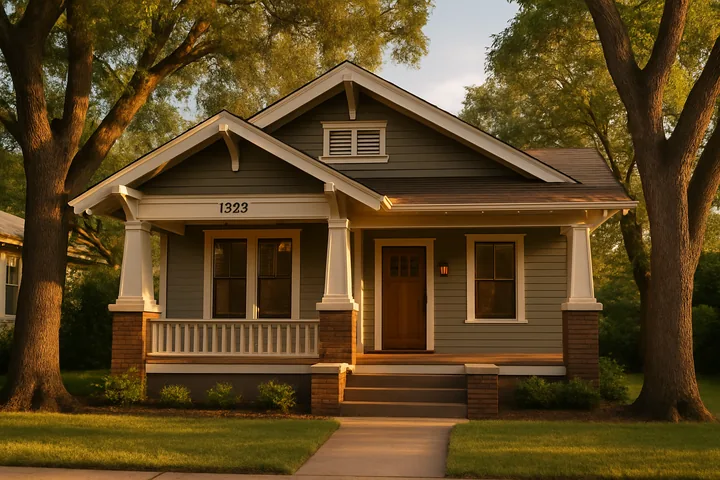
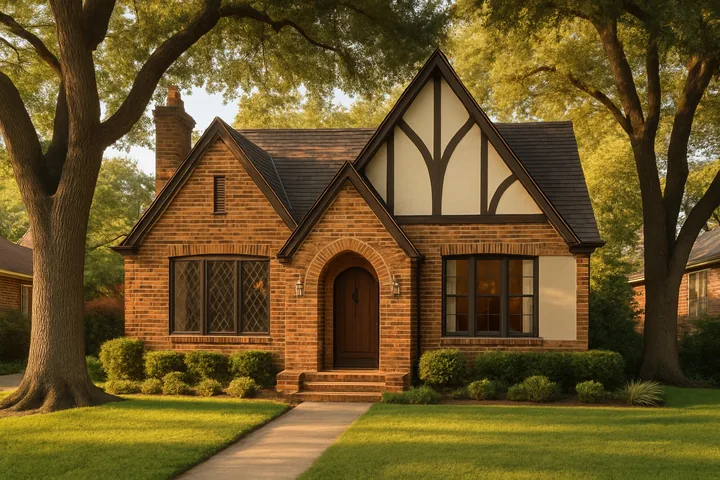
| Purchase price | $525,000 |
| Depreciable basis | $405,668 |
| Land allocation | 22.7% |
| 5-year reclassified | $34,285 |
| 15-year reclassified | $28,248 |
| Total reclass | 15.4% |
| Purchase price | $685,000 |
| Depreciable basis | $518,202 |
| Land allocation | 24.3% |
| 5-year reclassified | $47,935 |
| 15-year reclassified | $35,205 |
| Total reclass | 16.0% |
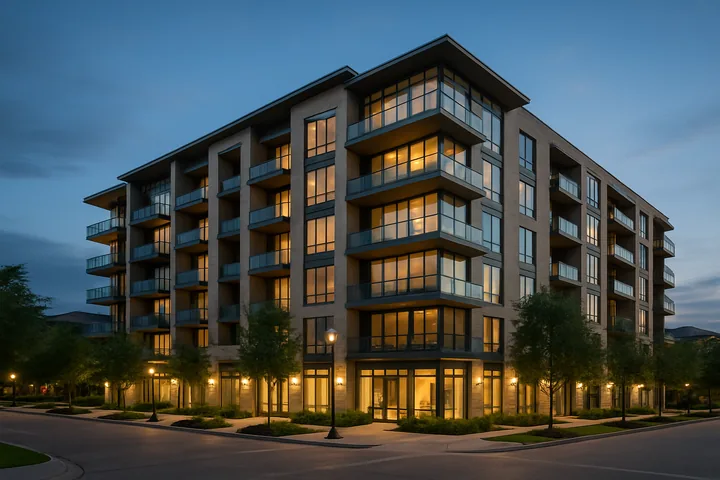
| Purchase price | $525,000 |
| Depreciable basis | $406,718 |
| Land allocation | 22.5% |
| 5-year reclassified | $43,049 |
| 15-year reclassified | $3,800 |
| Total reclass | 11.5% |
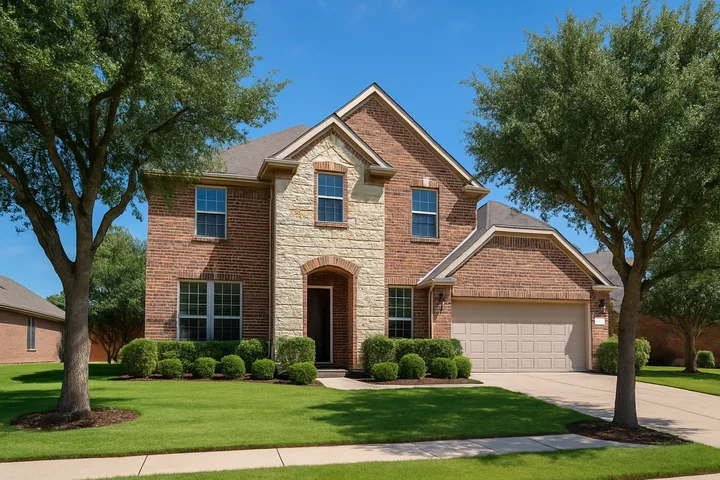
| Purchase price | $425,000 |
| Depreciable basis | $338,088 |
| Land allocation | 20.4% |
| 5-year reclassified | $32,769 |
| 15-year reclassified | $23,461 |
| Total reclass | 16.6% |
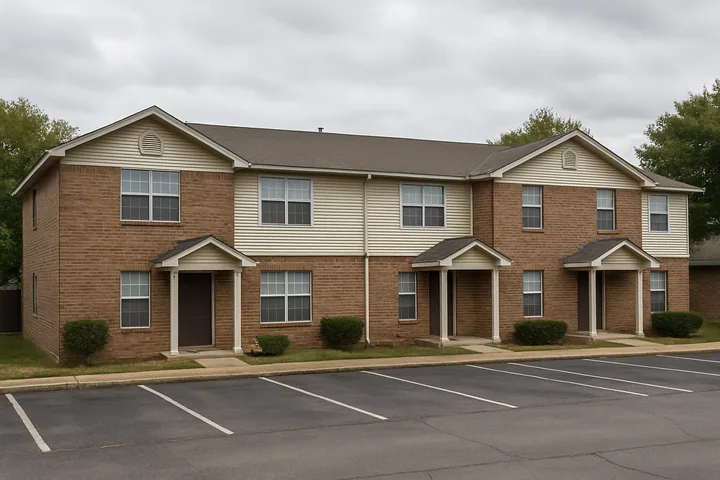
| Purchase price | $585,000 |
| Depreciable basis | $456,885 |
| Land allocation | 21.9% |
| 5-year reclassified | $62,642 |
| 15-year reclassified | $26,864 |
| Total reclass | 19.6% |
Cost-seg ROI varies more by neighborhood than by city. Dallas's 5 sub-markets each have their own land-allocation pattern and property archetype:
| Neighborhood | Typical value | Typical land allocation | Profile note |
|---|---|---|---|
| Bishop Arts / Oak Cliff | $525,000 | ~26% | Pre-war 1920s–1940s bungalow and craftsman stock heavily renovated post-2010. Strong fix-and-flip activity. Higher land allocation due to gentrification-driven scarcity premium. Mix of fix-and-flip and SFR rental. |
| M Streets / Lakewood | $685,000 | ~30% | Historic streetcar-suburb neighborhoods east of downtown Dallas. 1920s Tudor and Colonial Revival stock. Higher land allocation, established neighborhood-scarcity premium. Mix of fix-and-flip and high-end SFR rental. |
| Uptown / Oak Lawn | $525,000 | ~32% | Downtown-adjacent mid-rise condo dominant. Post-2010 new construction with cleaner reclassification ratios. Higher land allocation reflecting urban-core scarcity. Mid-rise condo investor market. |
| Plano / Frisco (suburban Collin County) | $425,000 | ~22% | Suburban SFR market north of Dallas in Collin County. Tech-employer-driven rental demand. Lower land allocation. Strong LTR rental cash flow. Collin County jurisdiction, separate from Dallas city regulation. |
| Arlington / Grand Prairie (Tarrant County, suburban) | $285,000 | ~18% | Lower-cost SFR rental market between Dallas and Fort Worth. Lowest land allocation. Strong BRRRR and build-to-rent activity. Tarrant County jurisdiction with permissive regulation. |
Methodology note: "Typical land allocation" reflects baseline patterns for the sub-market. For ultra-premium or resort-tier inventory where reconstruction cost exceeds 2.0× the implied depreciable basis after subtracting baseline land, the engine applies a premium land floor (~50%) to keep the study within audit-defensible territory. This means individual fixture engine output may exceed the neighborhood typical, especially for resort-tier ski-in/ski-out, beachfront, or view-premium product where land scarcity dominates value. See the /data/ page for per-fixture land-source attribution. Results vary substantially by specific property condition, renovation history, and assessor records.
City of Dallas Short-Term Rental Registration is permissive but evolving, STR operation is allowed subject to annual registration and lodging-tax remittance, with no primary-residence restriction. Dallas has been the subject of periodic STR ordinance reform discussions; verify current ordinance status before underwriting hold-period assumptions on STR-intent acquisitions. Adjacent jurisdictions: Collin County (Plano, Frisco, McKinney), Denton County (Denton, Lewisville), Tarrant County (Arlington, Grand Prairie, Fort Worth), all operate lighter regulatory regimes with varying city-by-city STR rules. For non-STR investor strategies (BRRRR, fix-and-flip, suburban SFR rental, small MF), Dallas's STR regulatory environment is irrelevant, standard §469 passive-loss rules apply, and real-estate-professional status is the typical path for high-volume DFW operators wanting to convert passive losses to active deductions.
For the full IRS-rule reference layer (§168(k), §469 material participation, state conformity), see irsdepreciationrules.com, our open reference site.
Yes, that's exactly what it means. Texas has constitutional prohibition on state individual income tax. There's no Texas-side reconciliation, no addback, no Schedule X, no decoupling math. For a Dallas BRRRR operator taking $90,000 of accelerated reclassification under OBBBA's 100% federal bonus, the federal Year-1 savings at 37% is $33,300 and that's the entire tax-savings story. Compare to California (decoupled, only federal accelerates), Oklahoma (15% partial addback recovered over 5 years), or even Colorado (federal-conforming, small additional 4.4% state savings). Texas is the cleanest possible state-tax position alongside Florida, Nevada, Tennessee, Wyoming, South Dakota, Alaska, and Washington (no individual income tax), all eight federal-only states produce the same clean Year-1 acceleration.
At portfolio scale, cost-seg becomes a default part of every closing rather than a per-deal decision. Each new acquisition gets a study performed immediately, $495–$1,495 fee against typical $15K–$35K Year-1 federal deduction at the DFW average price point. The studies stack against rental income from the rest of the portfolio (or against W-2 income if real-estate-professional status is established under §469(c)(7)). The $481(a) catch-up deduction allows cost-seg studies on properties acquired in prior years to recover missed acceleration in the year the study is performed, useful for portfolio operators who started cost-seg later in their building phase. Real-estate-professional status is typically achievable for full-time DFW BRRRR operators at 10+ properties given the 750+ hour annual requirement.
It enables an option that's structurally unavailable in many large metros, operating a Dallas property under the §469 short-term-rental loophole to convert passive losses to active deductions for W-2 income offset. The path: acquire a Dallas property, operate as STR with stays averaging under 7 days (Dallas's STR ordinance permits this with permit registration), materially participate (typically >100 hours of self-coordinated cleaning, booking, and maintenance), and the cost-seg accelerated losses become active rather than passive. Most DFW investors actually run LTR strategies, the year-round LTR demand profile is strong enough that STR operating economics often don't exceed LTR economics. But the STR-loophole option is structurally available and worth considering for high-W-2-bracket Dallas-resident buyers who specifically need W-2 offset.
Original 1920s–1940s Bishop Arts and M Streets construction (basic frame, original plumbing, original electrical, original plaster) sits in the 27.5-year residential category and reclassifies poorly. But these properties have typically seen $150K–$400K of post-2010 renovation: full electrical and panel upgrades (5-year work), kitchen and bath gut-renovations (5-year FF&E + fixtures), HVAC additions and conversions (mixed 5/27.5), deck and hardscape work (15-year land improvements), and structural foundation work in some cases. The engine treats renovation_cost as a separate allocable pool with its own MACRS distribution. For a heavily renovated Bishop Arts bungalow with $350K of post-2015 renovation against a $525K total purchase, the renovation pool can drive 60–75% of the total accelerated component.
Cost-seg studies are performed at any time during ownership and produce a one-time §481(a) catch-up deduction if performed in a year after acquisition. For BRRRR operators, the typical sequencing is: (1) acquire property; (2) renovate and stabilize as rental; (3) refinance to recover capital for next acquisition; (4) perform cost-seg study after refinance (or before, order doesn't materially change the math, but post-refinance studies catch any renovation cost added between acquisition and refinance). The refinance itself doesn't change basis or affect the cost-seg study; what it does is recover capital you can deploy to the next acquisition, where the cycle repeats. Texas's no-state-income-tax position means each cycle's cost-seg deduction captures cleanly with no state-side timing friction.
More general cost-seg questions answered at costsegsmart.com/faq/.
Cost Seg Smart studies are IRS-aligned, engineering-reviewed, and include written audit defense. Pricing is transparent and starts at $495 for residential properties under $300K, full pricing on the main site.